
Modern Education Problems May Require Ancient Solutions
As Australia’s education system faces scrutiny, ancient learning methods are gaining appeal.
By Joel Hall
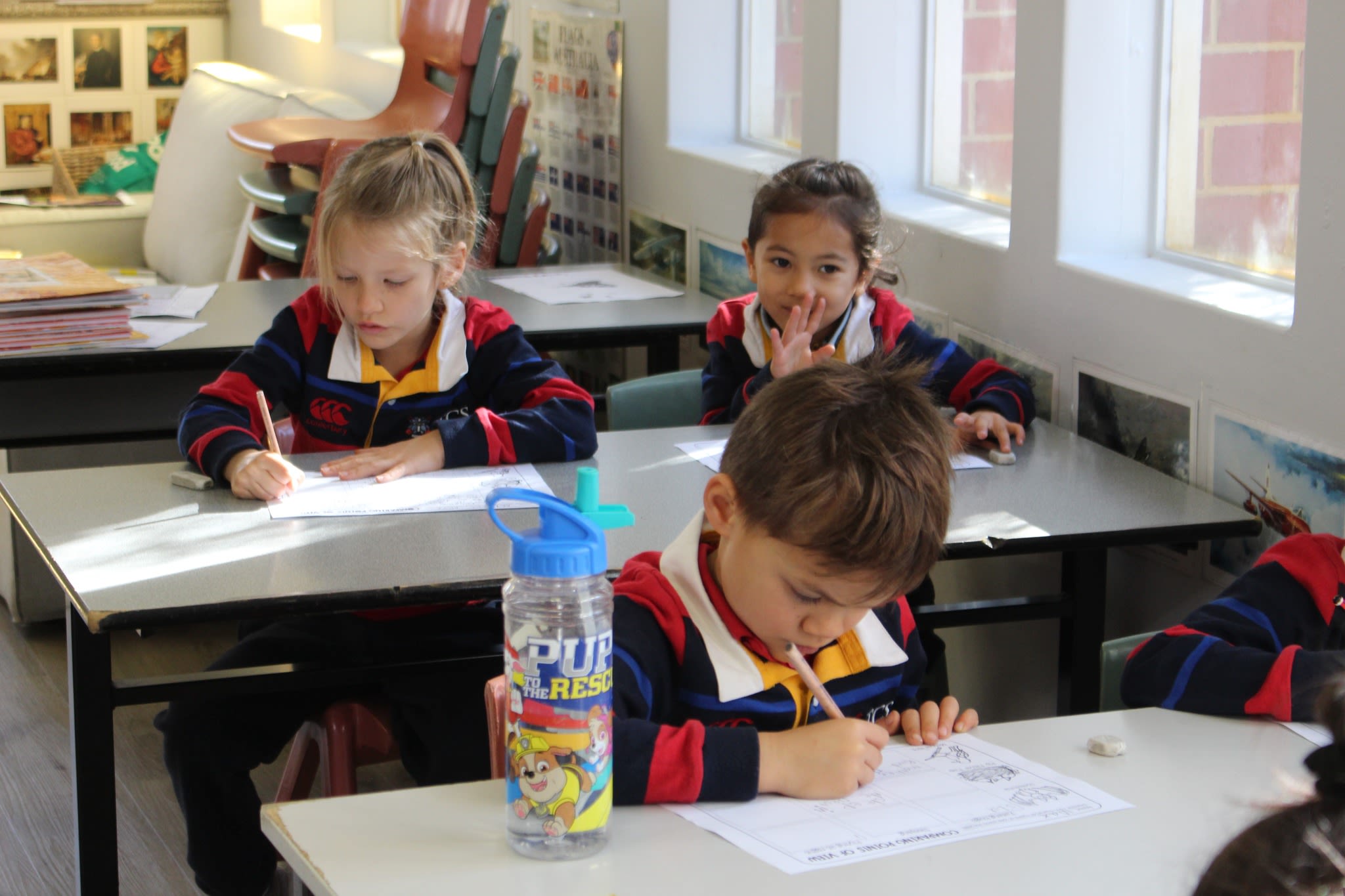

Situated in Perth's inner suburbs, a church parish hall has been temporarily modified into a classroom. Students sit around a ‘U-shaped’ cluster of tables. One of whom is on the edge of his seat dominating the classroom conversation. He plays rugby on the regular and sports a half-mullet. However, the content of his conversation isn’t about rugby. Rather, it’s about the plot of Jane Eyre. Yes, Jane Eyre- the 19th century literary classic. This is in fact just another day at ‘The Classical School’. A new educational setup in Perth that forms students in the ways of classical education.
It's an education style that’s gaining traction as Australia’s mainstream schooling faces criticism. This year’s NAPLAN results showed that one third of students failed to meet the proficiency levels for literacy and numeracy. Further, the rate of students who graduate public high schools has dropped by almost 5 percent since 2020. Moreover, parents who are disenfranchised with the mainstream system are increasingly placing their children in homeschool settings. So much so that the rate of permanent home schoolers in Western Australia doubled from 2016-2022 and has doubled in Queensland and New South Wales since 2020. Many voices from parents to politicians attribute these problems to factors ranging from increased technology use in classrooms, oversaturated educational bureaucracies or overcrowded curriculums. Regardless of what the actual factors are, many are saying that mainstream education needs a look-over, and that alternative, more ancient methods could offer a solution.

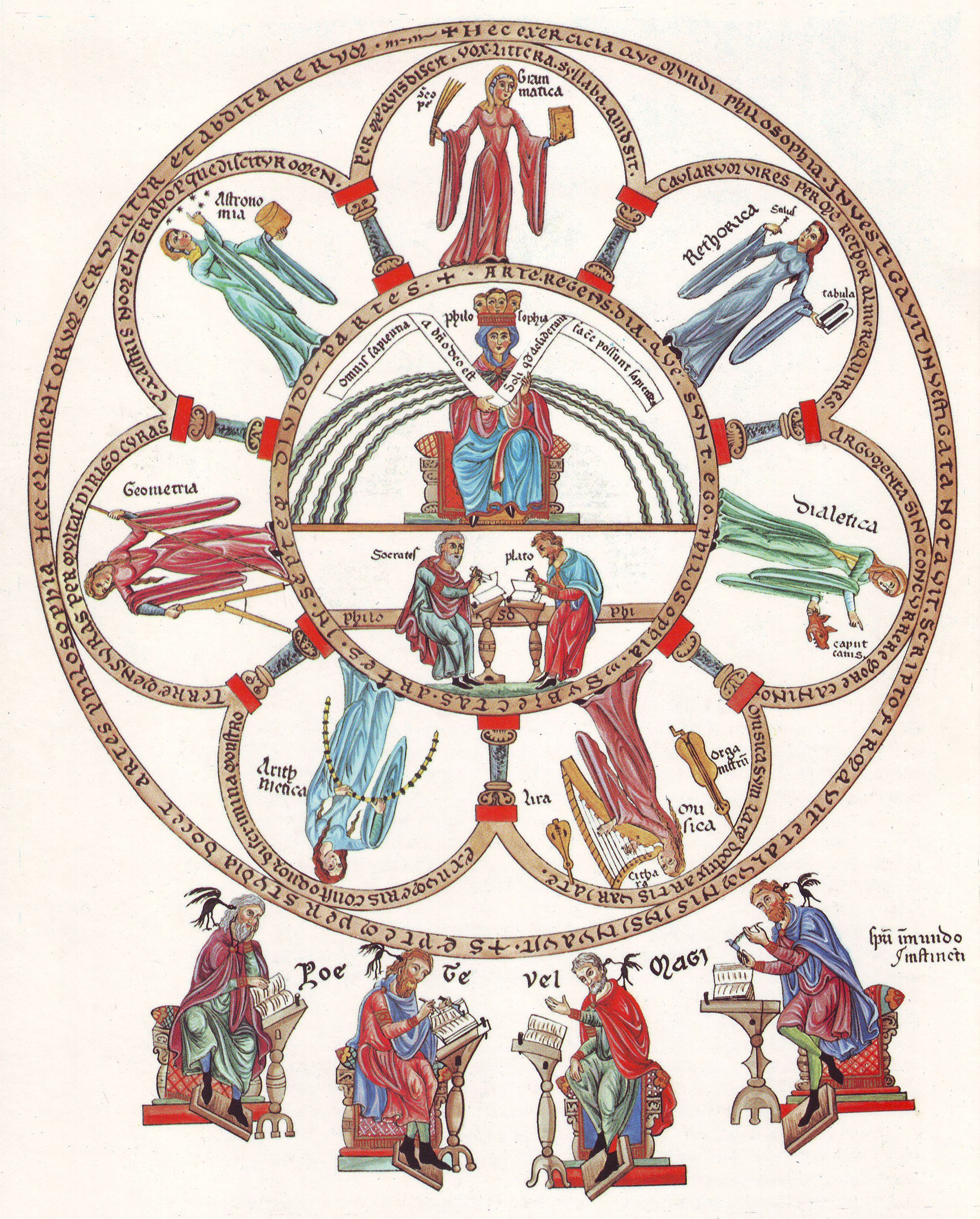
Lady Philosophy anchors the seven liberal arts: Septum arte liberals, Abbess Herrad Von Lansberg, C.1180 (public domain)
Lady Philosophy anchors the seven liberal arts: Septum arte liberals, Abbess Herrad Von Lansberg, C.1180 (public domain)
Forming Souls, Not Workers
Classical education hails from the Medieval European monastic centres and universities. It teaches subjects informed by the seven liberal arts: grammar, logic, rhetoric, arithmetic, geometry, music, and astronomy in an integrated manner with the purpose of creating the fully formed and virtuous person. Nowadays, still influenced by its Medieval roots, it utilises exponential repetition and ‘call and response’ methods within its holistic curriculum to teach students from kindergarten through to year 12.
Knowledge Society CEO Elena Douglas says viewing the student as a person is what sets Classical education apart from mainstream schooling. Knowledge Society advises Australian schools and government education authorities on how they can integrate the classical learning style into their curriculums. “A classical school will say that they want people who know the truth, do the good and love the beautiful,” she says. “You’re not forming workers, you’re forming souls.” She says mainstream education either lacks a purpose and if it does, it has a rather “depressing one”. That is, so students can get a job.
A 2019 study conducted in the USA found that graduates from public schools were 19 per cent more likely to feel that their life lacked a sense of direction than classical education alumni, whilst the gap was 24 per cent between classical school alumni and mainstream Catholic school alumni. The same study also showed that students formed in classical education were 34 per cent more likely to be prepared for university than public school graduates.
Douglas says that while mainstream education limits what it is to be human, students in classical education are entering into a millennia-long exchange of ideas.
“They’ve entered into this grand conversation that will be able to nurture and sustain them all through their life.” She says this enchanted paradigm sets the groundwork for learning whereby you build “a memory palace”.
"Scientists didn't call us Homo Sapiens for nothing. We are the knowing hominid and knowledge is thrilling for humans."
Out of 300 Classical Education Alumni
86%
Felt their education adequately prepared them for university.
79%
Read more than 10 books per year.
88%
Earned a Bachelor's degree or higher in university.
(Good Soil Study, 2019)
The Classical Resurgence
Classical education is experiencing a general resurgence within Europe and North America. Most notably, in the U.S where there are over 1,000 classical schools. Almost one quarter of which were founded since 2020. In Australia there are currently ten educational setups that give students a classical education. One will open in the next year, whilst another is in the works. Six of these schools are in the Eastern states, just one resides in South Australia and three are in Western Australia. One of these three Western Australian schools is ‘The Classical School’ which is situated in the suburb of Mount Lawley. Best described as a ‘microschool’ -or as seen on its website as a “private tutoring centre”- classroom sizes are capped at 16 enrolments and students only attend three days a week. Because students are still classed as ‘homeschooled’, they either receive further schooling at home on their days off or have longer weekends.
I venture to the setup to meet David Elsing, the school’s headmaster. He’s a man with deep beady eyes and a bushy brown beard. A contemplative if you were to ever picture one. I ask him what sparked his idea to found the microschool. “The idea has been brewing since 2012,” he says. “I got my first set of the ‘Great Books of the Western Canon’ from Mortimer Adler, the whole series. I paid $500 for the series. I put them into the back of my Volkswagen Golf. They barely fit. I drove them to our one-bedroom apartment in Sydney's Eastern suburbs. I arrived, and my wife said, ‘where are we going to put them?’ As a history class teacher, I felt like I'd stumbled upon a gold mine.” Those same books line the shelves in the school’s library. I spot some notable names: Homer, Plato, Aquinas and Chesterton.

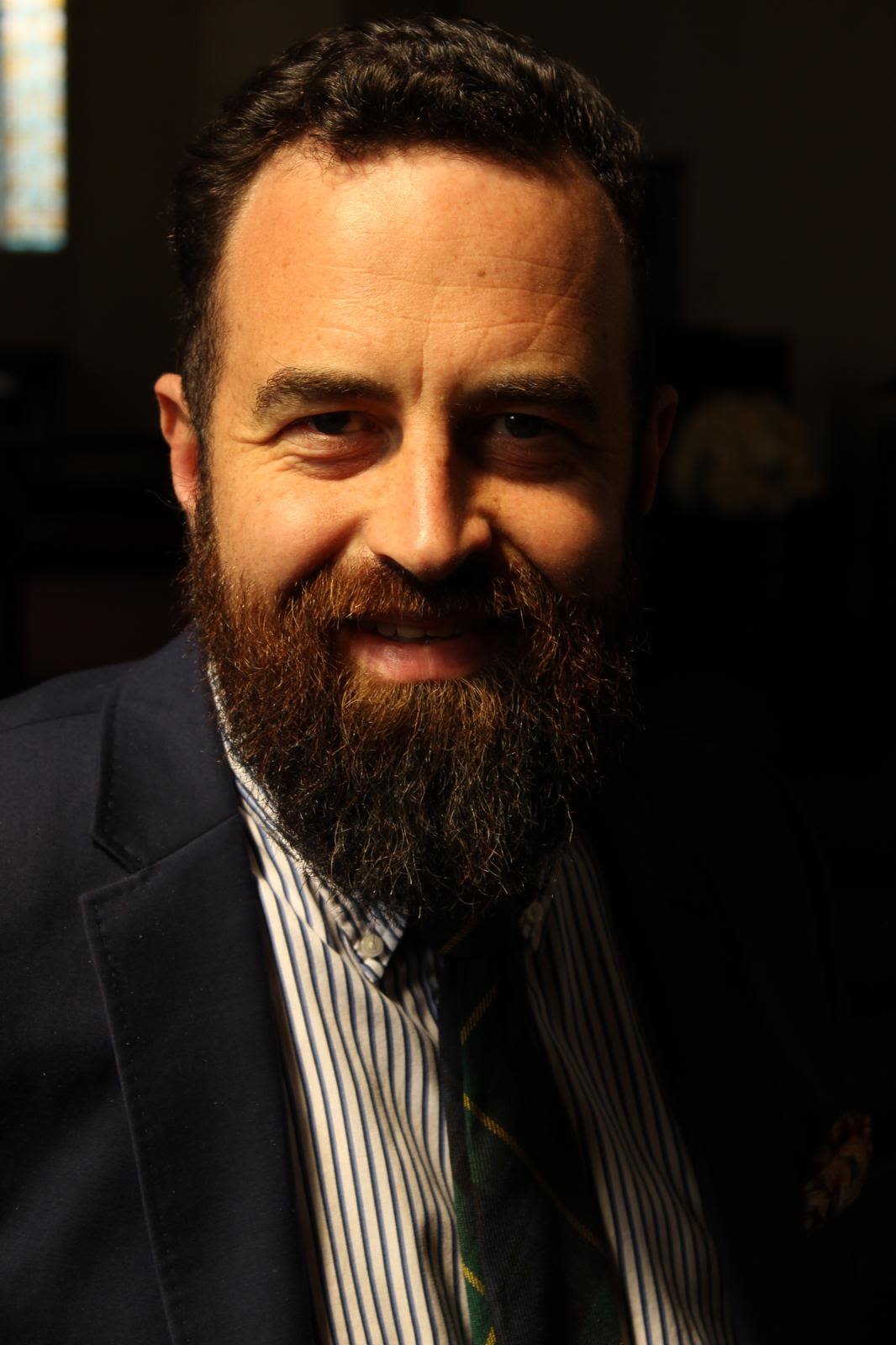
Mr. David Elsing. Credit: David Elsing
Mr. David Elsing. Credit: David Elsing
“As I say to the kids, 'if you can read you can teach yourself anything.'”
17-year-old Alumni of the setup Noah Kluger says the literature offered to him during his education introduced him to characters he’ll always have a connection to such as Odysseus, Dante and Macbeth.
“Old books are no longer dry and boring to me. Rather, they are full of life!” he says.
Noah’s father Alex Kluger received a classical education growing up in Germany. He says he placed his four children within ‘The Classical School’ hoping they would have the same pedagogical foundation he did.
He says the access to classical literature helps one understand “the past to live in the present” and being taught logic and rhetoric helps one learn to think and speak properly. All of which he is seeing the positive effects of in his own children.
“Their written and verbal articulation has matured and become more sophisticated. Plus, they call me out whenever I have a fallacy in my arguments,” he says with a smile.
When the ‘The Classical School’ was founded in 2021 it hosted just 16 students. Now, that number is at 65. Students are spread across five classes ranging from kindergarten through to year ten. Elsing says he hopes to get year 11 and 12 classes running but the microschool’s nature means it’s not eligible for government funding. Something which poses a problem for any prospects of rapid expansion. Currently, annual fees range from $7700-$10950 ascending with each age group.
Classroom Observations
The microschool meets at St Patrick’s Anglican church using its various buildings for classrooms. Elsing takes me through each classroom, beginning first with the year 4-6 class where the parish church itself houses a makeshift classroom.

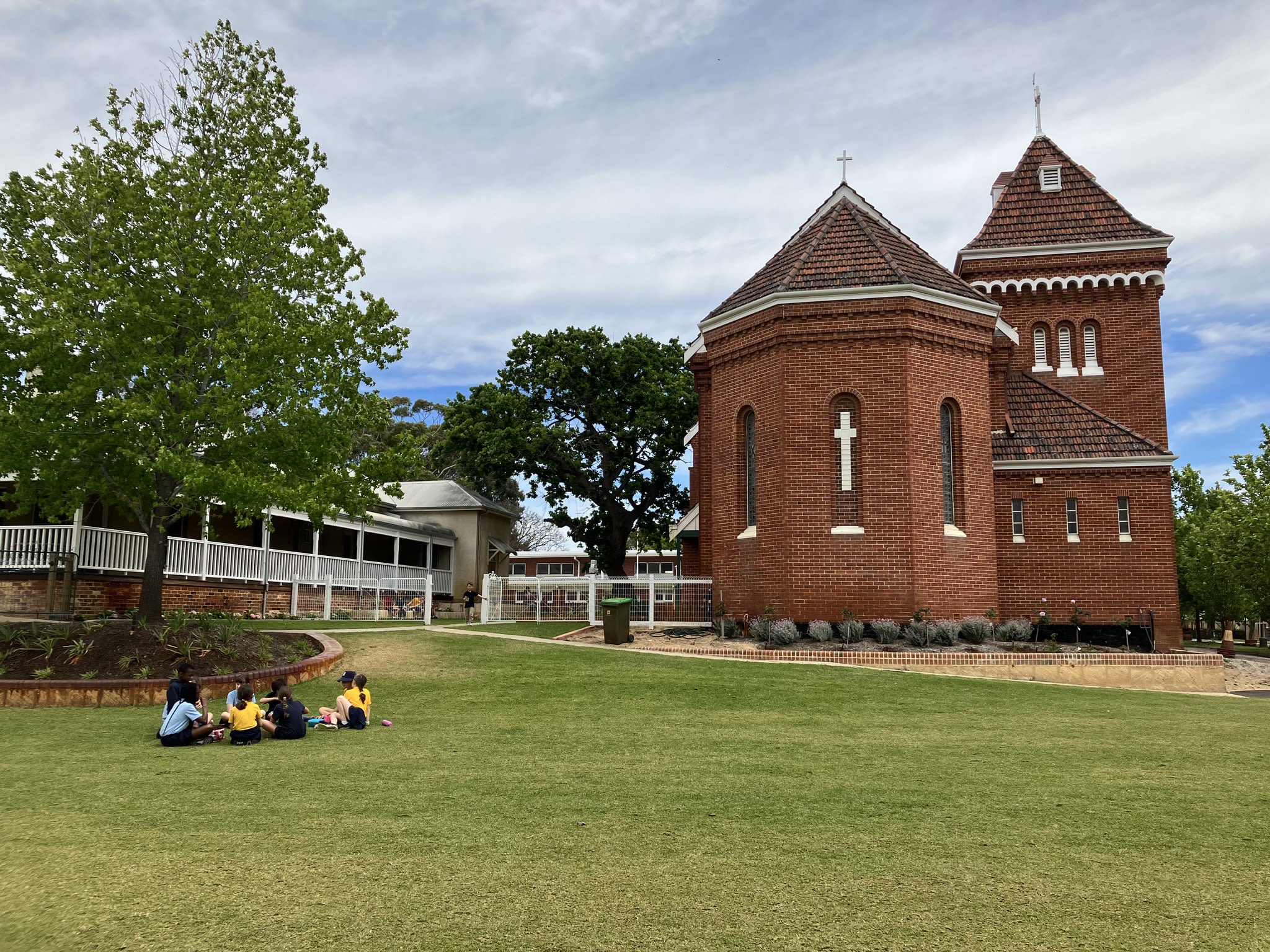
Upon entrance, I notice some boys at the back chatting amongst themselves as the teacher gives a lecture on biology. I assume their speech doesn’t pertain to the classwork. Yet, each time a question is asked, them and most other students shoot their hands right up hoping to be the one who answers.
Elsing assures me such enthusiasm is also found in mainstream schools. However, for all the seeming similarities with mainstream education I'm witnessing, the absence of technology use remains a salient difference.
He then takes me to the kindergarten class. I notice standard kindergarten objects such as a tub of Lego and a mat for naptimes. Yet amidst this, I'm struck by placards of famous paintings representing each letter of the alphabet. Van Gogh’s sunflowers decorate the wall underneath a letter ‘S’. “It’s about forming a standard of taste,” Elsing says.
Next, he shows me the script for the upcoming Oliver Twist performance to be conducted by the year 7-10 class. He says compulsory theatre is essential for students to overcome the timidity they may have developed during homeschooling.

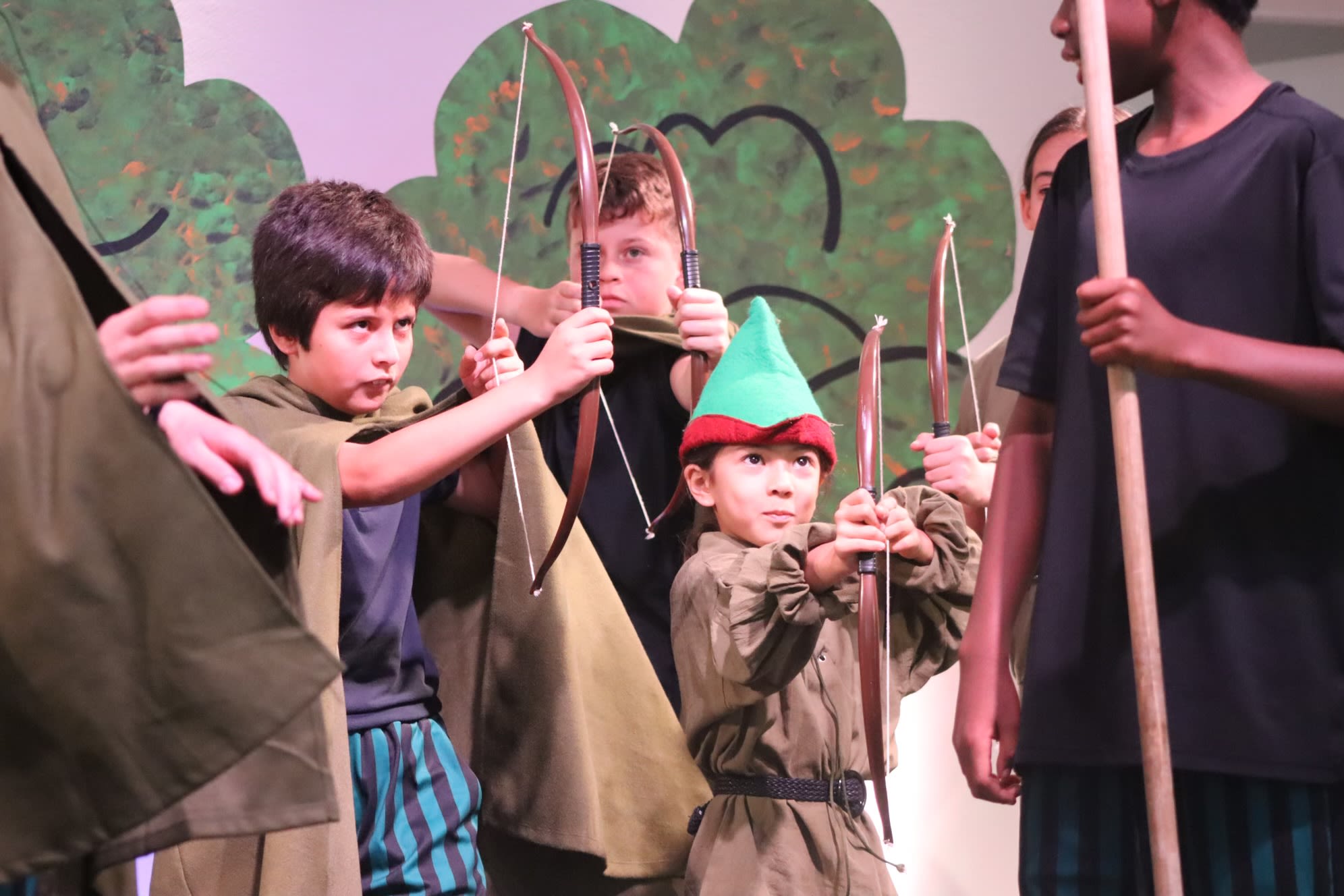

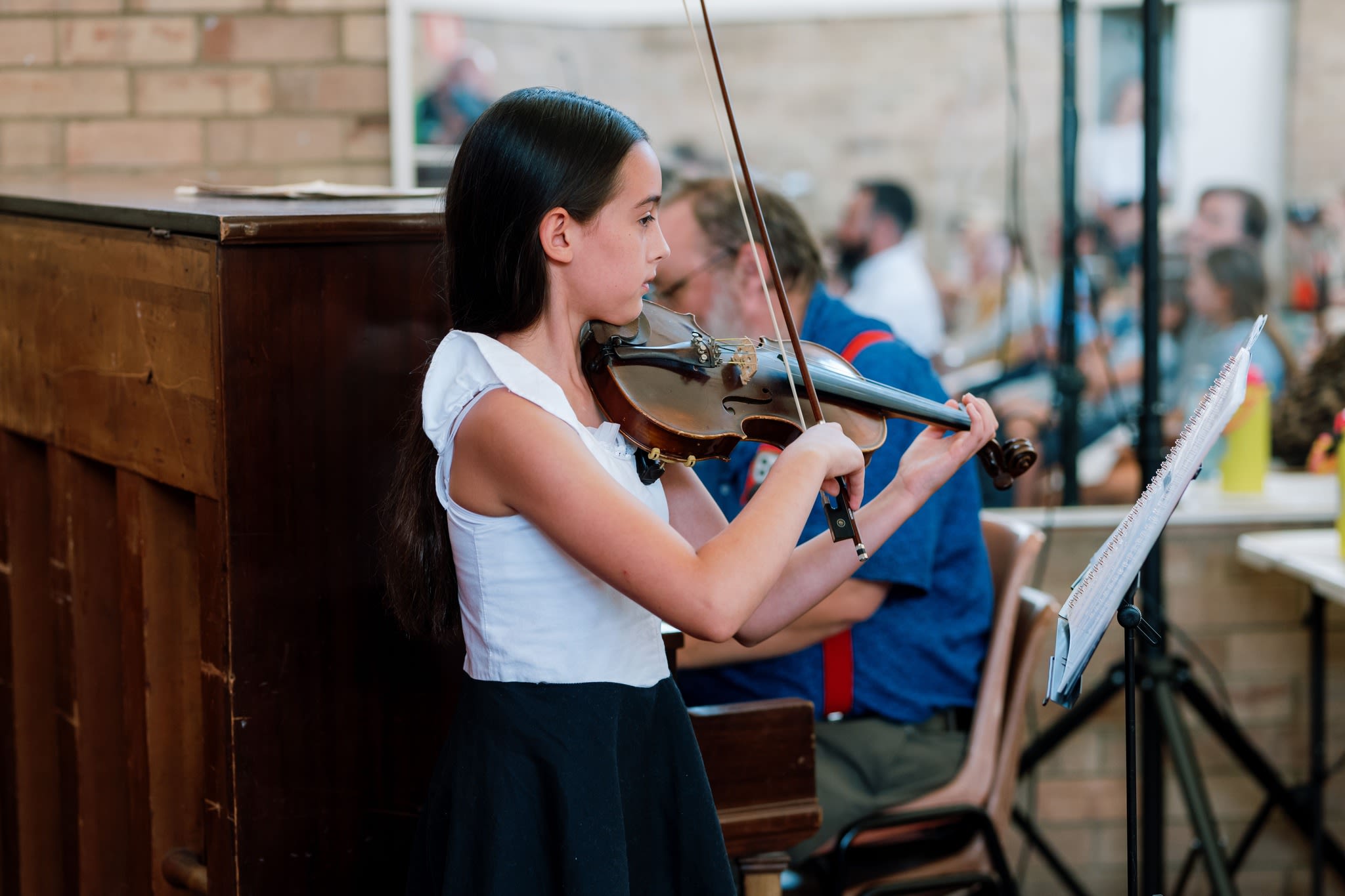
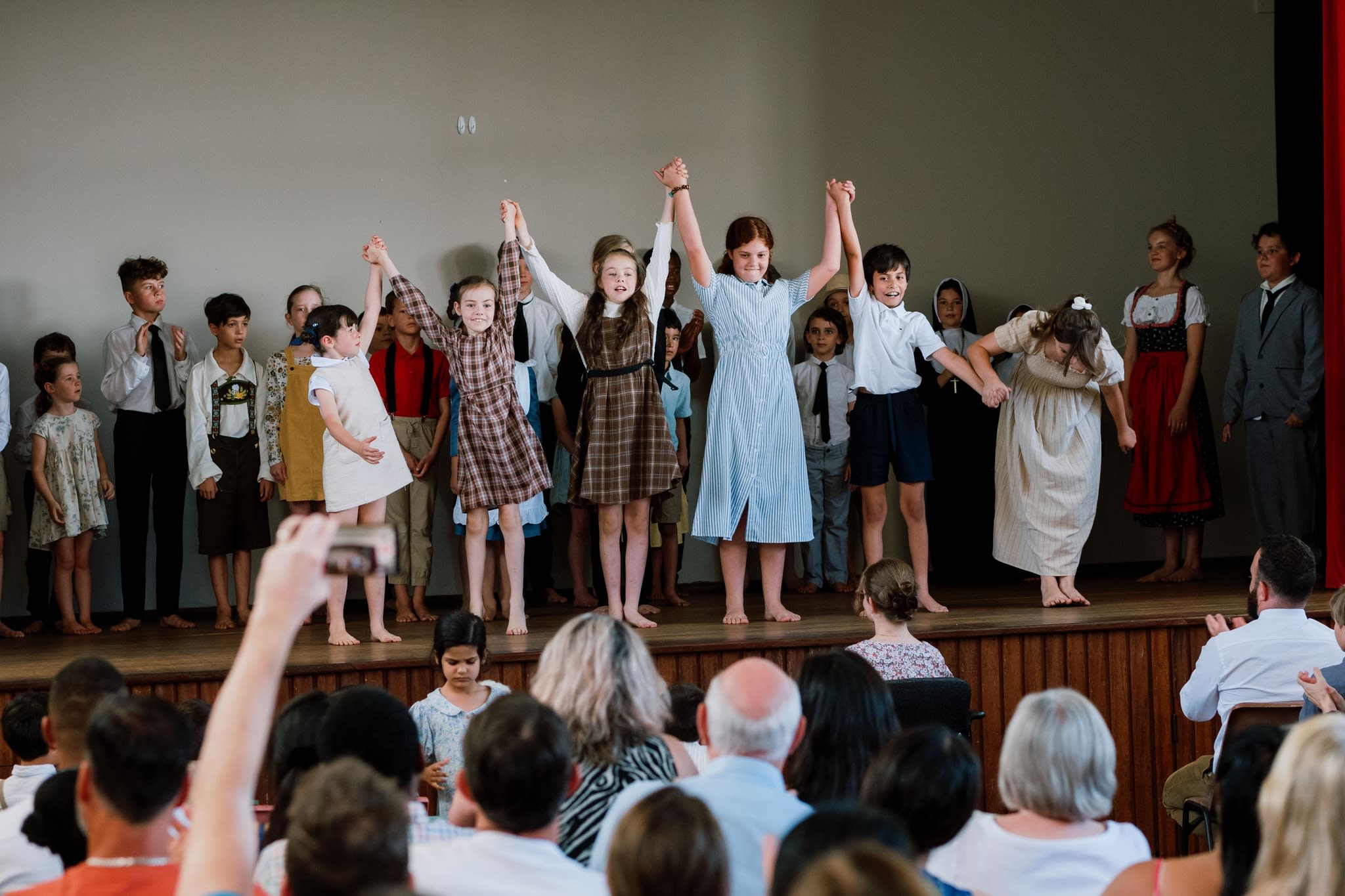
Within classical education, the aim is to form the student in mind as well as in the realm of the practical arts. Credit: David Elsing
Within classical education, the aim is to form the student in mind as well as in the realm of the practical arts. Credit: David Elsing
An Integrative Approach
The classical education model aims to integrate its varied subjects into a coherent whole so that learning is continually reinforced and given a why. I ask Elsing how ‘integration’ looks practically.
“Did you ever do maths in school and do sine, cos and tan?” he asks me.
“Yes,” I respond. I hope he doesn’t test me on how much I remember.
“Ok, tell me what it’s for?” he says. I’m stumped.
“It was to help track the moon in the night sky,” he continues, explaining why the Ancient Greeks used such a method. “That’s integration. Because then you’ve integrated your maths into astronomy. You’ve integrated that into history because now you’ve got a person in time and space who comes from a culture. So, now you’ve got HASS. That culture has artefacts. So now you’ve got visual arts. You might talk about his instruments and then you’ve got material technology.”
Elsing says the integrative approach alters the purpose of teaching from “tracking progress” to simply “blessing the children”.
“I don't care about the test. I care about the story that we're in with this discovery. That's more interesting.”

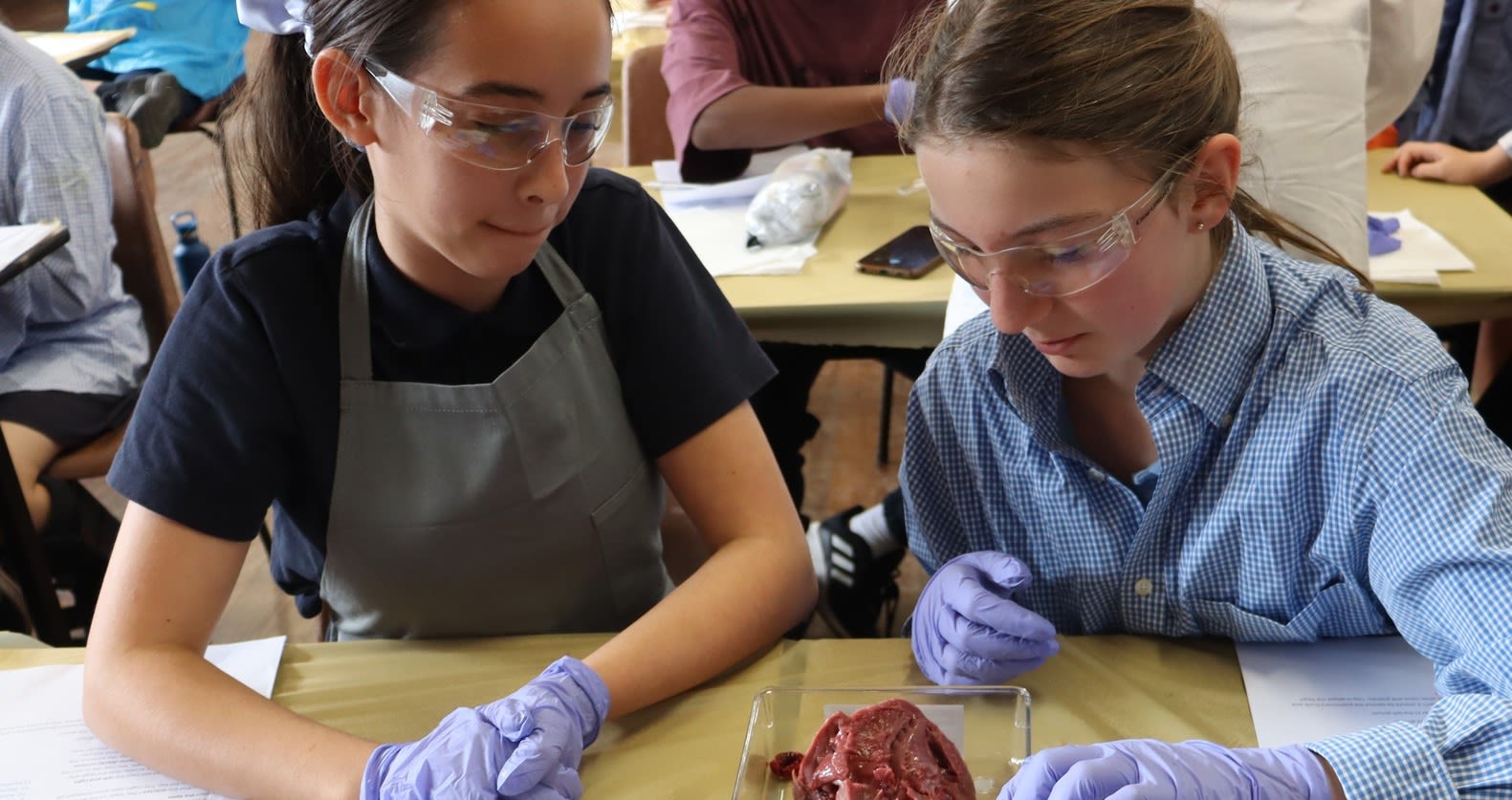
Dissecting a heart in Biology class. Credit: David Elsing
Dissecting a heart in Biology class. Credit: David Elsing
Noah says the integrated curriculum made what he learnt more “relatable” and “memorable”.
“I was not expecting it to have so many layers. One looks at classical education and thinks, ‘Okay, you read some old books and that's it.’ But it's much more. It's about discussing conflicting ideologies, about people, about so many things all woven into each other.”
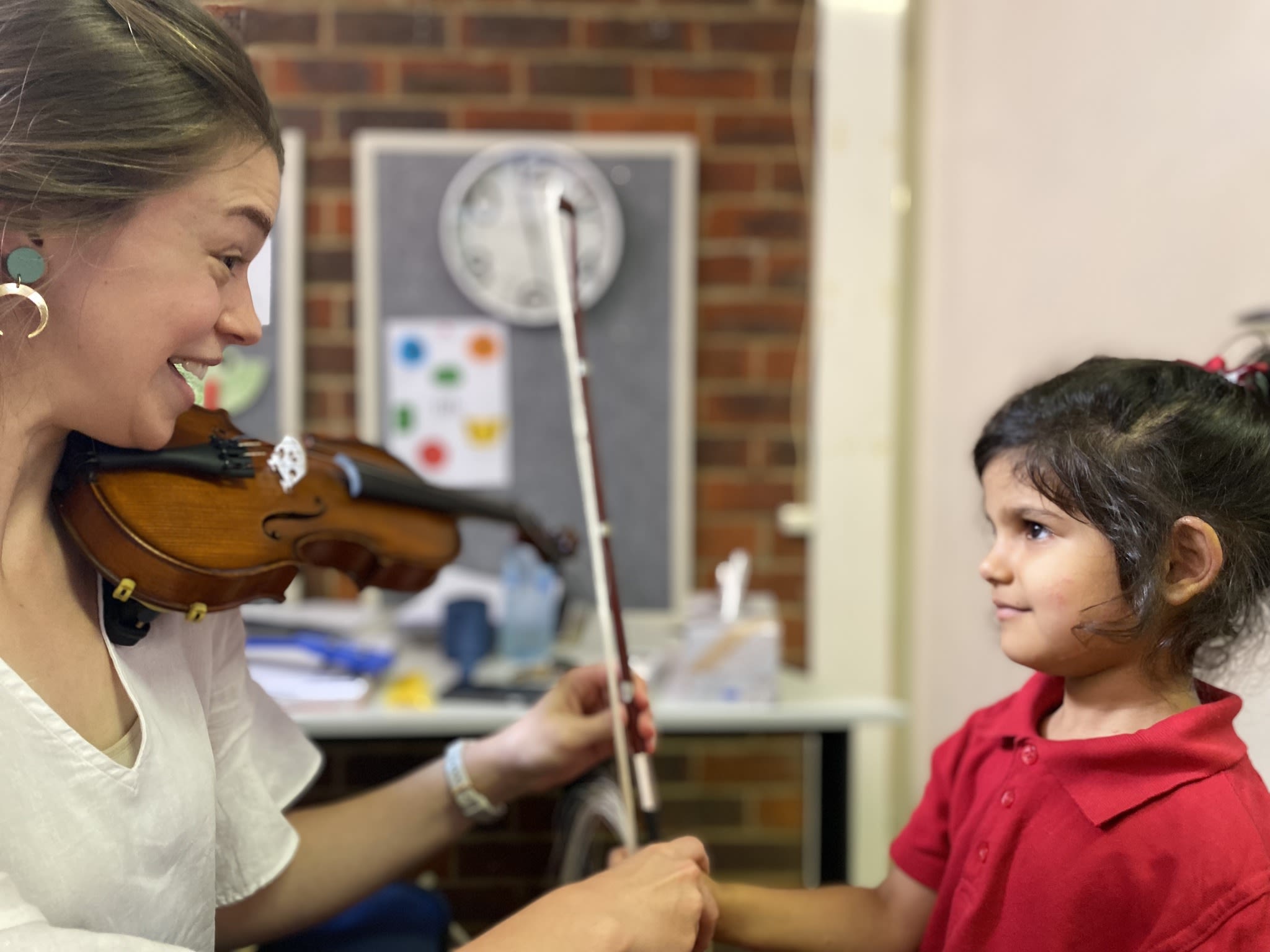
'Music of the spheres': Music, arithmetic, geometry and astronomy form the quadrivium within the seven liberal arts. These subjects pertain to studying the universe's fundamental building blocks. Credit: David Elsing
'Music of the spheres': Music, arithmetic, geometry and astronomy form the quadrivium within the seven liberal arts. These subjects pertain to studying the universe's fundamental building blocks. Credit: David Elsing
A Classical Future
Classical education has been criticised for being elitist. Considering this, Knowledge Society plans to expand classical education’s approach to knowledge into schools in lower socio-economic areas.
Douglas says her own advisory board and ones like it are “increasingly being embraced by state governments” to implement ‘knowledge-rich learning’ so that the gap is closed between schools in areas with different socio-economic strata.
Practically speaking this will involve an emphasis on gaining knowledge as opposed to information, all within “a brilliant curriculum that spirals around, that repeats things, and that gives the right breadth and depth in different disciplines,” she says.
However, she says the “holus-bolus” of the liberal arts experience is currently just being used for designated classical schools which are only Christian-adjacent.
When asked about the possibility of this also applying to mainstream schools, she says, “I think that's two horizons away, frankly. So, I think that's not the next step. Yet, I agree with the insight that there's no reason why this isn't for everyone.”
Considering the community of classical schools in Australia is in its infancy, David Elsing’s school is just four years old. Yet he urges me to “watch this space”.
“Hopefully in 10 years’ time I’ve got more anecdotes for you,” he tells me. For now, his school with its ‘mullet-wearing-Jane-Eyre-enthusiasts’ holds little influence within the broader educational landscape. Yet he reminds me, “Shakespeare says, ‘how far that little candle throws his beams.’ Imagine the darkest room with the littlest candle. And that light travels… great distances.”
 Built with Shorthand